Michelle Obama's Style: Identity, Representation, and 'Sleevegate'
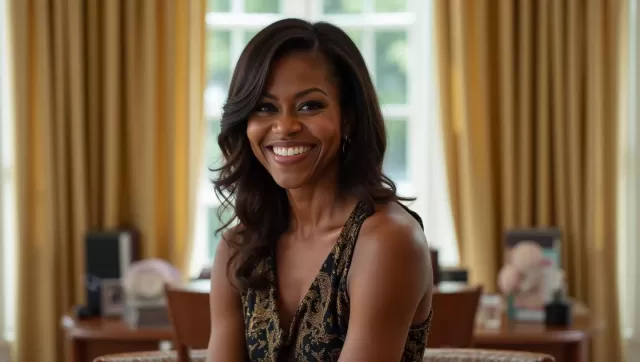
The unveiling of a First Lady's inaugural portrait marks a pivotal moment, not only signifying the start of her tenure but also visually articulating her distinct identity and approach to the role. Sixteen years ago, Michelle Obama's first official portrait, featuring her in a striking black sleeveless shift dress by American designer Michael Kors, ignited a particular public dialogue that she now addresses in her new photographic memoir, The Look. In this insightful volume, Obama reflects on how the intense public and media focus on her bare arms became a tool for "otherizing" her, suggesting a perceived deviation from established norms.
Unpacking the Scrutiny Over Bare Arms
The public's "fascination" with Mrs. Obama's sleeveless choices was extensively documented. Media outlets frequently highlighted her preference, noting instances like her appearance on the cover of Vogue or candid moments in the White House kitchen, all in sleeveless attire. However, it was her confident display of bicep-baring elegance during her husband's initial address to a joint session of Congress that truly intensified critical commentary. Detractors labeled her look as everything from "too informal" to "inappropriate" and even "out of season," with headlines like "Up In Arms" capturing the uproar.
While other First Ladies, including Jacqueline Kennedy, had previously worn sleeveless dresses without similar controversy, Mrs. Obama points out the unique intensity of the reaction she faced. She observes that while predecessors like Hillary Clinton endured criticism for her pantsuits or Nancy Reagan for her haute couture, her experience "felt different." She perceived a narrative emerging that portrayed her and Barack as Black individuals who didn't grasp the "rules" of the exclusive world they inhabited, and were not truly embraced within it.
Redefining Expectations: Beyond the Sleeves
The sleeveless debate was just one example of her style choices being deemed "un-First Lady like." During a 2009 trip to the Grand Canyon, aimed at promoting national parks, her practical ensemble of shorts, a tank top, an oversized shirt, and hiking trainers, which she found perfectly suited to the rugged terrain and warm climate, drew sharp criticism. A Washington Post fashion reporter infamously described her attire as "common," an article Obama found "particularly painful." She expressed her dismay that a fellow Black woman contributed to the "pile-on," especially early in an administration where she, as the first Black First Lady, was navigating uncharted territory.
This period also saw internal struggles within her team concerning the pervasive "angry Black woman" stereotype. Despite her growing reputation as a powerful orator who could attract larger crowds than her husband's opponents, Mrs. Obama was advised by her communications team to moderate her tone and facial expressions. Her passion and humor, they cautioned, could be weaponized against her. She recalls the frequent labeling of her as "angry" by the press, intellectually understanding the trope's power and acknowledging why Black women might indeed feel anger, but emphasizing that in these moments, she was simply expressing her authentic self.
Fashion as a Vehicle for Voice and Vision
Beyond the controversies, Michelle Obama masterfully transformed fashion into a potent tool for visibility and representation.
Championing Emerging Talent
A pivotal moment came with her choice for the inaugural ball. Defying expectations to wear an established designer like Oscar de la Renta, who had a long history with First Ladies, Obama instead selected a gown by Jason Wu. Wu, then an emerging Taiwan-born, New York-based designer, instantly saw his career amplified. Her decision, she writes, signaled her willingness to challenge the establishment and silently counter the notion of "how it's always been done" in the White House, asserting that "we can't change history with that attitude." Wu's white silk chiffon one-shoulder gown now resides in the Smithsonian's National Museum of American History, a testament to its impact. This move also underscored her commitment to supporting diverse, emerging designers, including Black, Asian, and Latina creators, lending "style to her substance," as academic Farah Jasmine Griffin notes in The Look's foreword.
Relatability Through "High-Low" Style
Serving during the height of a US recession also influenced Obama's fashion philosophy. Unlike Nancy Reagan's embrace of haute couture or Jackie Kennedy's preference for Chanel, Obama became renowned for her "high-low" approach. She seamlessly blended designer labels with accessible high-street fashion from brands like H&M, Target, and J. Crew. She understood the ceremonial significance of the First Lady role, which historically represented an ideal of womanhood. However, she was resolute in defining her own fashion narrative, rejecting a "look, don't touch" approach. Instead, she aimed to invite people in – for connection, meaningful conversation, and to embody her vision of an open and welcoming White House. Her clothing, she explains, had to authentically reflect this philosophy.
Through her deliberate choices and candid reflections, Michelle Obama offers a profound insight into how her style was not merely about clothing, but a powerful means of communication, representation, and a quiet defiance of narrow expectations.