Fashion That Transcends the Binary
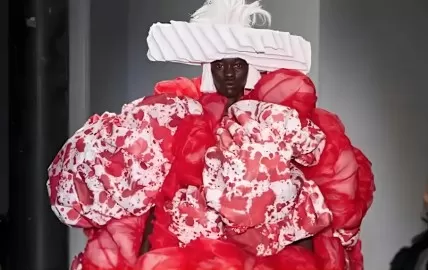
Not many people ever watch a Comme des Garçons fashion show and say to themselves how beautiful or how minimalist and sophisticated the catwalk looks have been, and that's mainly for the exact reason that Rei Kawakubo creates collections that dwell in the abstract implications of things and constructivism alike. Fashion, at a very simplified level, is a language—a system of sorts.
Many have believed for years that commercial viability and artistic integrity are not meant to meet, but Phoebe Philo at Céline also demonstrated that clever design at a conceptual plane can be both commercial and artistic at the same time too. She provided the industry with minimalist chic, modern femininity, and functional design—the print ads, if you remember or not, had models wearing the brand's clothes in front of a backdrop of bicycles or rubbish bins—but she took a brand that was performing "okay" and made it a brand one wanted to wear.
At the same time, Virgil Abloh's positions at Off-White and Louis Vuitton had also bridged the gap between streetwear and luxury, and in my honest opinion, he has also successfully opened a conversation about what you should call "high fashion." His designs, although had been critiqued as merely rip-off ideas that joke about "acceptance" in the industry concerning race, class, and culture, had actually been very, very successful with the consumers.
It used to be the common thought that catwalks were the ultimate form of fashion art, a runway show, but the situation has drastically changed. This event was once limited to the guests only, and the industry insiders were the only ones invited to it, but now the shows are streamed all over the world and can be seen by millions of people. This shift has brought the designers back to the drawing board, and they have had to think afresh about how a catwalk idea relates to a selling reality. After Loewe's 10th-anniversary show last week, Johnathan Anderson made this remark: "I just think there's no point in showing clothes for clothing's sake."
Brands like Tom Ford, Burberry, and Tommy Hilfiger have also experimented with the'see now, buy now' concept, which means that the usual period of six months between the runway showcase and retail is no more. Although this notion is not generally recognized, it does provide a glimpse into the potential of a union between the artistic and commercial sides of the project.
The most exciting events in the field are those when such a preconception is distorted. A case in point was the highly anticipated John Galliano show for Maison Margiela. This year the January event was a hit in both show and craftsmanship, with a stunning combination of engineering, corsetry, make-up artistry, set design, and of course, beautiful clothes.
The fashion world will not face the choice of whether art or commerce will be the picked one in the near future, but rather the melding of both will lead to a richly spun complexity of their own. This is a vivid example of such interaction—one between the catwalk dream and street reality, conceptual and commercial fashion.